


Hardware Wallet Best Practices in 2026: What's Changed and What Still Gets People Hacked
Date Posted: July 23 2026
If your hardware wallet has been sitting in a drawer for two years and you assume you’re covered, you’re not.
The threat landscape has shifted. Deepfake phishing, wallet-draining malware, and blind-signing exploits have made 2026 a record year for crypto crime. The scariest part? Almost every successful attack comes down to users ignoring the fundamentals. Nobody is cracking cryptography.
A hardware wallet is still the best security tool available to a self-custody investor. Owning one isn’t the same as using it correctly.
Why the Old Rules Aren’t Enough
Three years ago the standard advice was: buy a Ledger or Trezor, write down your seed phrase, never share it. Still valid. No longer complete.
The threat model now includes wallet drainer malware that automatically signs malicious transactions, SIM-swap attacks targeting SMS authentication, and supply chain compromises hitting manufacturers directly. The attack surface isn’t just your seed phrase anymore. It’s your firmware, your signing behavior, and the device itself.
What’s Actually New in 2026
Blind signing is the number one silent killer. It means approving a transaction where you can’t clearly see the address, amount, or authorization content on your device screen. You tap confirm. The contract does something completely different from what you intended. Most DeFi interactions still involve blind signing to some degree. The fix: use a hardware wallet with a screen large enough to display full transaction data, read what you’re signing before every confirmation, and use wallets that support clear-signing plugins for known protocols.
AI-powered phishing has gotten uncomfortably good. Deepfake voice calls and AI-generated emails designed to extract private keys are now indistinguishable from legitimate support communications without close inspection. The rule hasn’t changed: no legitimate hardware wallet company, exchange, or DeFi protocol will ever ask for your seed phrase. Not in an email, not in a support chat, not ever.
SMS two-factor authentication is dead. SIM-swap attacks are too cheap and easy. If you’re still using your phone number as a security layer for anything crypto-related, replace it with a hardware security key or an authenticator app today.
What Still Gets People Hacked
Storing the seed phrase digitally. Photos in iCloud. Screenshots on Android. A note in Google Keep. Any of these can be compromised if your account credentials are. The only acceptable storage is offline and physical. A metal backup plate stored somewhere secure is the minimum standard.
Buying from third-party sellers. Always buy directly from the manufacturer. A device from Amazon or eBay is a potential supply chain attack. It may arrive with compromised firmware or a pre-generated seed phrase the seller already knows.
Using one wallet for everything. Long-term cold storage and daily DeFi activity should not share the same wallet. One malicious contract interaction shouldn’t be able to drain your life savings. Keep them separate: a cold wallet for long-term holdings, an active wallet for DeFi, and a hot wallet for small daily amounts only.
2026 Security Checklist
- Purchased directly from the official manufacturer
- Firmware updated via official process only
- Seed phrase stored offline and physical, never digital
- SMS 2FA replaced with a hardware key or authenticator app
- Separate wallets for cold storage vs. active DeFi use
- Transaction details read in full before every confirmation
- No one else knows your seed phrase or PIN
If any item is a no, fix it this week.
Hardware Wallets Worth Knowing
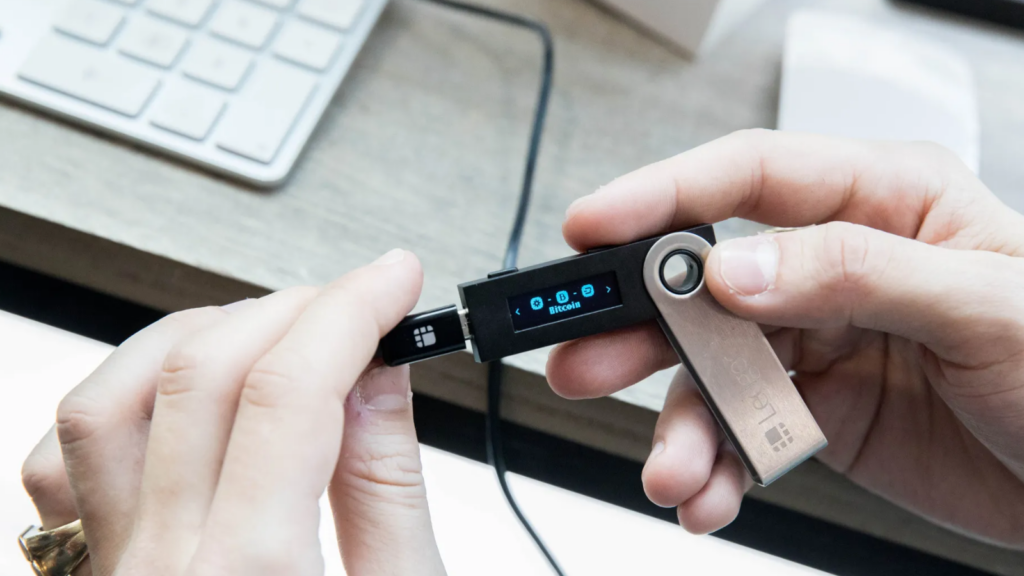
Ledger Flex is the top pick for most users. Large readable screen, broad DeFi and NFT support, certified Secure Element chip. Right for anyone managing a multi-chain portfolio.
Trezor Model T remains a strong open-source alternative. Coldcard Mk4 is the Bitcoin-only choice for people who want zero dependencies. Keystone Pro offers air-gapped signing via QR codes, eliminating USB attack vectors entirely.
The best hardware wallet is the one you understand and actually use correctly.

Crystep’s Take
Self-custody is the core of what we believe in. But a hardware wallet with the wrong setup is a false sense of security, not real protection.
We help high-net-worth clients build non-custodial strategies where security architecture is part of the design from day one. Proper key management, wallet compartmentalization, estate planning integration, and active DeFi supervision — without ever holding your keys.
If you’re not confident your current setup would survive a targeted attack, it’s worth a conversation.
Book a security review with Crystep | info@crystep.com